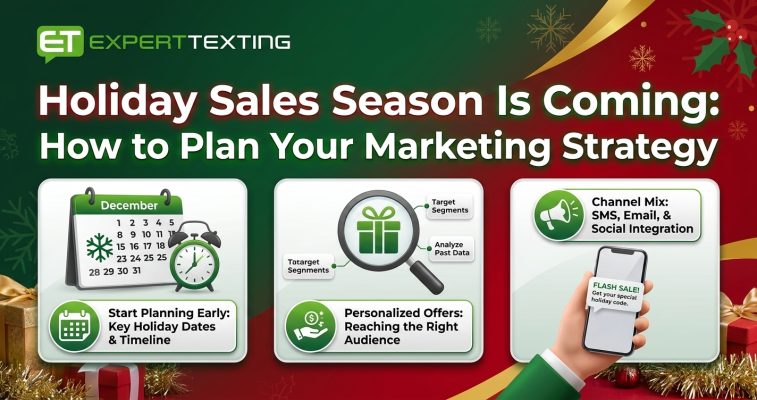
Holiday Sales Season Is Coming: How to Plan Your Marketing Strategy
Black Friday lands on November 27 this year, which is less than three weeks away. If your plan is still a rough idea, you’re not behind yet, but you don’t have time to wait.
At Expert Texting, we see the same pattern every year. Businesses that decide their texts, offers, and dates early send calmer, clearer messages. Businesses that improvise in late November end up sending too much, too late, to people who are tired of being asked to buy.
This guide walks you through a simple holiday SMS marketing strategy, from building your list this week to your last New Year text. You’ll get a send calendar, sample messages, and tips for keeping customers interested instead of annoyed.
What Is a Holiday SMS Marketing Strategy?
A holiday SMS marketing strategy is a plan for which texts you send, to whom, and when, across the shopping season. It covers your offers, your message schedule, your list building, and how you measure results.
Think of it as a calendar with a purpose behind every message. Some texts build excitement before a sale. Some announce the deal. Some remind people it’s ending. A few simply say thank you.
Why Text Messages Fit the Holiday Rush
Holiday shopping is crowded and fast. Inboxes fill up, social feeds are full of ads, and shoppers make decisions in minutes.
A text cuts through that noise because it arrives on the device people check all day, and most people read texts quickly. That makes SMS marketing for holiday sales a good fit for deals with short deadlines, like doorbusters, flash sales, and shipping cutoffs.
Here is what texting does well during the season:
- Speed. You can announce a deal and see sales within hours.
- Urgency. A deadline feels real when it shows up on a lock screen.
- Control. You reach your own list without paying for each view.
- Simplicity. One short message, one offer, one link.
Holiday SMS Marketing Strategy Calendar for 2026
Dates drive everything in this season. Here is a send plan built around the 2026 calendar, from today through the new year.
| Dates | Moment | Message Goal |
| Nov 9 to 20 | Pre season | Grow your list and tease what’s coming |
| Nov 23 to 25 | Early access | Reward subscribers with a first look |
| Nov 26 | Thanksgiving | A short thank you, no hard sell |
| Nov 27 | Black Friday | Launch your main offer |
| Nov 28 | Small Business Saturday | Support local and in store traffic |
| Nov 30 | Cyber Monday | Online deals and last chance reminders |
| Dec 1 to 14 | Gift planning | Gift guides and bundles |
| Dec 15 to 22 | Shipping deadlines | Order by dates and last call offers |
| Dec 23 to 25 | Christmas week | Gift cards, pickup, and thank yous |
| Dec 26 to 31 | After Christmas and New Year | Clearance, gift card reminders, New Year offers |
You won’t send all of these. Pick the moments that fit your business. A restaurant may care most about December gift cards. An online store may focus on Black Friday through the shipping cutoff.
A good rule is to send no more than two to four texts a week at the peak, and fewer outside it. Watch your opt-out rate after each send and adjust.
Step 1: Build Your List Before Black Friday
Your texts are only as good as your list, and you still have a couple of weeks to grow it. Focus on quick, honest wins.
- Add a signup box to your homepage, cart page, and checkout.
- Put a QR code on receipts, packaging, counters, and window signs.
- Offer a reason to join, such as early access or a small welcome discount.
- Promote a keyword, like “text HOLIDAY to join,” on social media and in email.
- Send a welcome message right away that confirms the signup and explains how to opt out.
Only text people who agreed to hear from you. Keep a record of when and how they signed up, and honor STOP requests immediately. Rules vary by country, so check the requirements where you operate.
Step 2: Choose Offers That Fit Your Business
Offers matter more than clever wording. A strong offer with a plain message beats a weak offer with a fancy one.
Here are offer types that work well in holiday text message campaigns:
- Early access: Subscribers shop the sale before anyone else
- Tiered discounts: Spend more, save more
- Free shipping thresholds: Easy to explain and easy to act on
- Bundles: Gift sets that save people time
- Gift cards: Good for last-minute shoppers
- Doorbusters: A few steep discounts for a few hours
- Loyalty rewards: Extra points or perks for repeat customers
Pick two or three, not all of them. Too many offers confuse people, and confused customers don’t buy.
Step 3: Write Holiday Promotional Text Messages That Get Read
Good holiday promotional text messages follow a simple pattern. Start with your business name, make one clear offer, add a deadline, give a next step, and include an opt-out line.
Here are templates you can adapt.
Pre-Season Teaser
“[Business Name]: Our biggest sale of the year starts Friday. Subscribers get early access Thursday at 9 am. Stay tuned. Reply STOP to opt out.”
Early Access
“[Business Name]: You’re on the list, so you shop first. Early access is open now: 25% off sitewide. Use code EARLY25 at [link]. Reply STOP to opt out.”
Black Friday Launch
“[Business Name]: Black Friday is live. 30% off everything until midnight. Shop now: [link]. Reply STOP to opt out.”
Cyber Monday
“[Business Name]: Cyber Monday deals end tonight at 11:59 pm. Free shipping on orders over $50. Shop: [link]. Reply STOP to opt out.”
Shipping Deadline
“[Business Name]: Order by Dec 18 for delivery before Christmas. Use code SHIPFAST for free shipping today. [link]. Reply STOP to opt out.”
Last Minute Gift Cards
“[Business Name]: Still need a gift? Send an instant gift card by text or email: [link]. Reply STOP to opt out.”
New Year Offer
“[Business Name]: New year, new deals. 20% off with code FRESH26 through Jan 3. [link]. Reply STOP to opt out.”
Put your business name at the start of each message. It helps customers recognize you and keeps your texts from looking like spam to carriers.
Step 4: Time Your Messages Well
Timing can change results as much as the offer itself. A few practical rules help.
- Send during waking hours. Late morning and early evening work for many businesses.
- Use deadlines that are real. Fake urgency hurts trust.
- Space your messages. Use mass texting to schedule sends, so each one has room to work.
- Send a reminder, not a repeat. A “ends tonight” text works better than the same message twice.
- Mind the holidays. On Thanksgiving and Christmas Day, a short thank you is usually better than a sales push.
For shipping deadlines, check your carrier’s published cutoff dates, then build your messages around them. Customers value clear dates more than discounts in the last week before Christmas.
Step 5: Keep Customers Engaged, Not Overwhelmed
Holiday SMS marketing fails most often when businesses text too much. Shoppers are already getting messages from every store they’ve ever visited.
Here are ways to stay welcome:
- Mix message types. Alternate offers with helpful notes, like gift ideas or shipping dates.
- Segment your list. Send different texts to new subscribers, repeat buyers, and people who haven’t bought in a while.
- Reward loyalty. Give your best customers early access or a small extra perk.
- Answer replies. If someone texts a question, respond quickly. A real answer can close a sale.
- Say thank you. A short thanks after the season builds goodwill for next year.
A two way SMS setup makes replies easy to manage, so customers can ask about sizes, stock, or delivery without leaving the conversation.
A Simple Example: A Local Home Goods Shop
Picture a small home goods shop with an online store and one physical location. This is an illustrative scenario, not a customer case study.
In mid-November, the owner posts a QR code at the register and adds a sign-up box to her website, offering early access to the Black Friday sale. By the week of Thanksgiving, her list has grown by a few hundred people.
On Wednesday, subscribers get an early access text. On Black Friday, the main offer goes out in the morning, with a reminder that evening. On Small Business Saturday, a message invites people to visit the shop. In mid-December, she sends a shipping deadline text and a gift card reminder. After Christmas, a short thank you and a clearance offer close the season.
That is only about eight to ten messages across six weeks, each with a clear purpose. Nothing about it requires a big team.
Common Mistakes in Holiday Text Message Campaigns
Most seasonal mistakes are easy to avoid when you know them in advance.
- Starting too late. List building and planning take time.
- Sending too often. A flood of texts drives opt-outs.
- Skipping your business name. Unknown senders look suspicious.
- Vague offers. Say exactly what the deal is and when it ends.
- Leaving out the opt-out line. Always include it.
- Texting at odd hours. Respect normal waking hours.
- Not testing. Send each message to your own phone first, and check that every link opens on mobile.
How to Measure Your Holiday Results
You don’t need a complicated dashboard. A few numbers tell you what is working.
- List growth: how many new subscribers joined
- Click rate: how many people tapped your link
- Redemptions: how many used your code
- Revenue per message: what each send brought in
- Opt-out rate: how many people left after each send.
After the season, write down what worked. Which offer drew the most orders? Which day performed best? Those notes become the starting point for next year, and they save you from repeating the same guesses.
If you want help planning your texts, setting up templates, and scheduling the season, Expert Texting can walk you through how it works, and you can compare plans on the pricing page.
Final Thoughts
A good holiday SMS marketing strategy is not about sending more messages. It’s about sending the right ones at the right moments, to people who asked to hear from you.
Start this week. Build your list, pick two or three offers, and put your send dates on a calendar. You can read more ideas in our business industry guides, or explore the features page to see how scheduling and list tools work.
Frequently Asked Questions
1. What is a holiday SMS marketing strategy?
It’s a plan for the texts you send during the shopping season, including your offers, timing, list building, and measurement. A good plan gives every message a clear purpose.
2. When should I start holiday SMS marketing?
Start list building and planning now, ideally two to three weeks before Black Friday. Send a teaser first, then early access, then your main offer.
3. How many holiday text message campaigns should I send?
Most businesses do well with two to four texts a week at the peak and fewer outside it. Watch your opt-out rate and adjust if people start leaving.
4. What should holiday promotional text messages include?
Include your business name, one clear offer, a deadline, a link or code, and a way to opt out. Keep it short enough to read in a few seconds.
5. Is SMS marketing for holiday sales worth it for small businesses?
Yes. Texting costs little, reaches customers quickly, and suits short deadlines. Even a small list can produce sales when the offer is clear.
6. Do I need permission to send holiday texts?
Yes. Get clear consent before texting, identify your business, and offer an easy way to opt out. Rules vary by country, so check the requirements where you operate.
7. What is the best time to send Black Friday and Cyber Monday texts?
Many businesses send a morning launch and an evening reminder. Test a few send times and compare results, since your customers may behave differently from the average.
8. Should I text customers on Thanksgiving or Christmas Day?
A short thank you is usually better than a hard sell. Save your promotional texts for the days around the holiday, when people are more likely to shop.
About the Author

Sign up for free