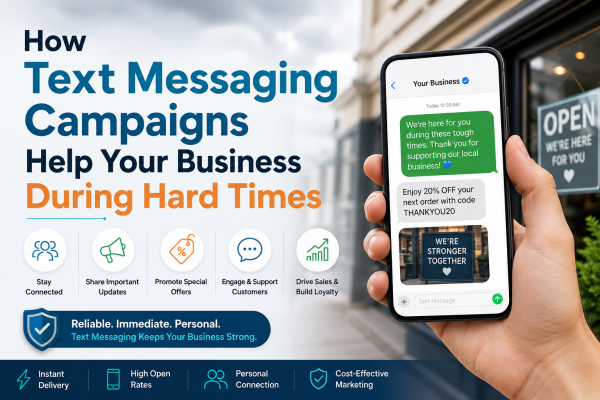
How Text Messaging Campaigns Help Your Business During Hard Times
Every business hits a rough patch. Sales dip, foot traffic slows, and the phone stops ringing as much as it used to. When that happens, most owners panic and cut their marketing budget first, which usually makes things worse.
There’s a smarter way to ride out a slow season, and it doesn’t cost much. Text messaging campaigns are one of the few marketing tools that keep working even when your budget shrinks. They’re direct, they’re cheap, and people actually read them.
In this guide, we’ll walk through why text message marketing holds up so well during tough times, how to run a campaign that actually brings customers back, and what real businesses have done to stay afloat using nothing more than a phone number and a good offer.
Think of this less as a marketing lecture and more as a practical playbook. You’ll find steps you can put into action today, not vague theory you have to figure out on your own. By the end, you should have a clear picture of how to set up your first text messaging campaign and what to expect from it.
Why Text Messaging Campaigns Work When Money Is Tight
When budgets get cut, the first thing to go is usually the expensive stuff: billboards, print ads, paid social campaigns that cost a fortune and deliver vague results. Text messaging campaigns survive the cut because they cost pennies per message and go straight to a device people check within minutes.
Here’s the simple math behind it. Open rates for text messages sit around 98 percent, and most people read a text within three minutes of getting it. Compare that to email, where open rates hover between 20 and 30 percent on a good day. If you need customers to act fast, texting gets there first.
A few reasons text message marketing holds up during a downturn:
- It’s affordable enough for a small budget to still reach thousands of people
- Customers opted in, so they already want to hear from you
- Messages feel personal instead of like another ad in a crowded feed
- You can send an offer today and see results by tomorrow
Businesses that lean on text messaging campaigns during hard times often come out the other side with a stronger customer list than when they started, simply because they kept talking to people instead of going quiet.
The Real Cost of Going Silent During a Slow Season
A lot of business owners think pulling back on marketing saves money. It doesn’t. It just delays the damage.
When you stop reaching out, customers forget about you. They don’t wait around loyally until you’re ready to market again. They find another business to fill the gap, and once that habit forms, it’s hard to break.
Text messaging campaigns solve this by keeping the connection alive without draining your budget. A short message reminding someone about a sale or a new product costs almost nothing to send, but it keeps your name in their pocket, literally.
Think about the last time your favorite coffee shop or salon went quiet for a month. Did you keep thinking about them, or did you start trying other places nearby? Silence has a cost, even if it doesn’t show up on a spreadsheet right away.
How to Build a Text Messaging Campaign That Actually Works
Running a good campaign isn’t complicated, but it does take a plan. Here’s a simple breakdown any business owner can follow, even without a marketing background.
1. Start With Permission
Never text people who haven’t agreed to hear from you. Build your list through sign-up forms at checkout, a QR code on your receipt, or a sign in your store that says something like “text JOIN to get 10% off your next visit.” This keeps you compliant and keeps your open rates high, since everyone on the list actually wants your messages.
It also protects your business long term. Sending unsolicited texts can lead to fines and damage your reputation fast, since people report unwanted messages as spam within seconds. A clean, opted-in list might grow slower than a purchased one, but it performs far better because everyone on it actually cares about hearing from you.
Make signing up feel like a reward, not a chore. A ten percent discount, early access to a sale, or a free item on their next visit all give people a reason to type in their number. The easier you make that first step, the faster your list grows.
2. Keep the Message Short and Clear
People don’t want to read a paragraph on their phone. Get to the point in the first line. Say what the offer is, what they need to do, and by when.
A message like this works well:
“Hey Sarah, things are tight for everyone right now, so here’s 20% off anything in store this weekend. Just show this text at checkout.”
3. Time It Right
Send messages when people are likely to act, not at 6 am or during dinner. Late morning and early afternoon tend to work well for most local businesses.
4. Segment Your List
Not every customer wants the same message. Someone who buys every week is different from someone who hasn’t shopped with you in six months. Split your list and send messages that fit each group.
5. Track What Works
Watch your redemption rates and reply rates. If a message flops, change the offer or the wording next time instead of guessing.
Common Mistakes That Hurt Text Messaging Campaigns
Even a good idea can fall flat if it’s executed poorly. Here are a few mistakes that trip up new business owners to text message marketing.
Sending too many messages too fast. If someone signs up and gets three texts in the first week, they’ll opt out before they ever see your best offer. Space your messages out and let people get comfortable with hearing from you.
Making the offer confusing. If a customer has to reread your text twice to understand what you’re offering, you’ve already lost them. Keep the value obvious in the first sentence.
Forgetting a clear call to action. Every message needs to tell the reader exactly what to do next, whether that’s showing the text at checkout, clicking a link, or replying with a word to confirm.
Ignoring replies. When customers respond to a text, whether with a question or a thank you, answering back builds trust. Leaving them on read sends the opposite message.
Treating every customer the same. A first-time visitor and a five-year regular don’t need the same message. Sending generic blasts to your whole list wastes the personal touch that makes texting so effective in the first place.
Avoiding these mistakes is often the difference between a campaign that quietly fades and one that keeps bringing customers back month after month.
Real World Examples of Businesses Using Text Message Marketing to Survive
A family owned restaurant in a small town saw dine in traffic drop by nearly half during a rough economic stretch. Instead of cutting staff right away, the owner built a text list from regulars and sent a simple offer: buy one entree, get one free on Tuesdays and Wednesdays, their two slowest nights. Within a month, those nights were busier than their weekends used to be.
A local gym facing a wave of membership cancellations sent a text offering a frozen membership instead of a full cancellation, along with a smaller add-on offer for personal training sessions. Many members took the freeze option instead of quitting outright, which kept the gym’s revenue from dropping as hard as it could have.
A boutique clothing store used text messaging campaigns to clear out old inventory before a slow season, sending flash sale alerts that only lasted 24 hours. The urgency, combined with the direct nature of the text, moved product that had been sitting on shelves for months.
A regional auto repair shop chain took a different approach during a slow winter season. Instead of pushing a discount, they sent maintenance reminders tied to the weather, letting customers know it was a good time to check their brakes or battery before the cold set in. The messages felt helpful rather than salesy, and appointment bookings rose noticeably in the weeks that followed.
A small bakery facing rising ingredient costs used text messaging campaigns to promote a loyalty punch card system through SMS instead of paper cards. Customers texted a code after each purchase to track their progress toward a free item. The bakery kept customers coming back more often just to fill up their digital card, which helped offset the higher cost of ingredients without raising prices.
None of these businesses had huge budgets. What they had was a list of people who already trusted them and a way to reach those people instantly. That’s the real advantage of text messaging campaigns during a downturn: they turn existing trust into repeat business without requiring new customers to find you first.
Text Message Marketing vs Other Channels During Hard Times
Not every marketing channel holds up the same way when money gets tight. Here’s how text stacks up against the usual options.
| Channel | Average Open Rate | Cost Per Contact | Speed of Response | Works Well During Slow Periods |
| Text Messaging | ~98% | Low | Minutes | Yes |
| ~20 to 30% | Low | Hours to days | Somewhat | |
| Social Media Ads | Varies widely | Medium to High | Hours to days | Depends on budget |
| Print Ads | Not trackable | High | Days to weeks | Rarely |
| Cold Calling | Low answer rate | Medium (staff time) | Immediate if answered | Rarely |
Text messaging campaigns win on speed and cost, which matters most when cash flow is the whole problem. Email still has a place for longer content, but for urgent offers and quick reminders, text is hard to beat.
Tips From a Text Expert on Getting the Most Out of Every Campaign
After years of watching what works and what falls flat, a few lessons stand out for anyone running SMS campaigns on a budget.
- Don’t send too often. Two to four messages a month is usually the sweet spot before people start opting out.
- Always give people a reason to act now, not “someday.” Deadlines drive action.
- Personalize with a first name when you can. It’s a small touch that makes a real difference in response rates.
- Reply to customers who text back. A campaign that feels like a real conversation builds loyalty faster than one that feels automated.
- Test your offer on a small group before blasting your whole list.
A good mass texting service makes most of this easy to automate, from scheduling to list segmentation to tracking replies, so you’re not doing it all by hand.
Choosing the Right Mass Texting Service for Your Business
Not every SMS platform is built the same. When you’re picking a mass texting service, look for a few key things:
- Compliance features that keep your list opted in and legal
- Easy list segmentation so you can target different customer groups
- Clear reporting on open rates, clicks, and redemptions
- Support that actually answers when you have a question
- Pricing that makes sense for a small or mid sized business, not just enterprise clients
At Expert Texting, we built our platform around exactly this kind of simplicity, because business owners going through a hard stretch don’t have time to fight with clunky software. Whether you run a restaurant, a gym, a boutique, or any other local business, the goal is the same: keep talking to your customers when it matters most.
Business Industry Guides for Getting Started
If you’re new to text message marketing, it helps to look at guides built for your specific type of business rather than generic advice. Business industry guides that focus on restaurants, retail, healthcare, or service businesses will walk you through examples and message templates that fit your customers, instead of leaving you to guess.
Starting with the right template saves time and avoids the trial and error that eats into your slow season budget. Click above to join a platform that offers these kinds of guides, along with support to help you set up your first campaign correctly.
When to Run an SMS Blast vs a Targeted Message
Not every message needs to go to your entire list. There’s a difference between an SMS blast, which goes out to everyone at once, and a targeted message aimed at a smaller group.
An SMS blast works well for announcements that apply to everyone, like a storewide sale, a holiday closing, or a big product launch. It’s fast, simple, and gets the word out quickly when timing matters more than personalization.
A targeted message works better for specific things, like a win-back offer for customers who haven’t visited in a while or a birthday discount tied to someone’s sign-up date. These smaller sends tend to get higher engagement because the message actually fits the person reading it.
A good rule most business owners follow is to use an SMS blast sparingly, maybe once or twice a month for the biggest news, and rely on targeted messages the rest of the time. This balance keeps your list engaged without wearing out its welcome.
If you’re not sure which approach fits your situation, a text expert on a platform like Expert Texting can review your customer list and suggest a mix of blast and targeted messages that match how your business actually operates. What works for a busy restaurant won’t always work for a quiet boutique, and getting that balance right early on saves a lot of trial and error later.
Getting Started With Your First Campaign
If you’ve never run a text messaging campaign before, don’t overthink the first one. Pick a single offer, build a small list, and send one clear message. Watch how people respond, then build from there.
Hard times don’t last forever, but how you handle them shapes what your business looks like on the other side. Businesses that keep a direct line open with their customers, even a short text every few weeks, tend to bounce back faster because they never fully lost touch.
Expert Texting works with businesses of every size to set up text messaging campaigns that fit tight budgets and short timelines. You don’t need a big team or a complicated setup to start seeing results- just a clear offer and a way to reach the people who already want to hear from you.
What to Expect in the First Few Months
The first campaign rarely tells the full story. It usually takes a few sends to learn what your customers respond to best, whether that’s a discount, a limited-time item, or simply a friendly reminder that you’re still open and thinking of them.
Track your numbers from the start. Look at how many people redeem an offer, how many reply, and how many opt out. These three numbers together give you a clear picture of what’s working and what needs adjusting.
Most business owners notice a pattern within the first two or three months. Certain days perform better, certain offers pull more people in, and certain phrases in the message seem to get more replies. Once you spot that pattern, lean into it. Consistency, more than any single clever message, is what turns a text list into a dependable source of revenue during a rough stretch.
Frequently Asked Questions
1. How much does a text messaging campaign cost for a small business?
Costs vary by provider, but most small businesses can run a solid campaign for less than what they’d spend on a single print ad. Pricing usually depends on your list size and how many messages you send each month.
2. How do I build a text list if I’m starting from zero?
Start with people who already know your business, such as email subscribers or in-store customers. Offer a small incentive, like a discount code, in exchange for signing up through a keyword or QR code.
3. Is text message marketing legal?
Yes, as long as you get proper opt-in consent and include a way for people to opt out. A good mass texting service will build these compliance steps into the sign-up process for you.
4. How often should I text my customers?
Two to four times a month works for most businesses. Texting too often leads to opt-outs, while texting too rarely means people forget who you are.
5. What kind of businesses benefit most from SMS blast campaigns?
Any business with repeat customers benefits, but restaurants, salons, gyms, and retail stores tend to see the fastest results because their customers make quick, frequent decisions.
6. Can text messaging replace my other marketing during a slow season?
It shouldn’t fully replace everything, but it can carry more of the weight when your budget is tight, since it costs less and gets read faster than most other channels.
About the Author

Sign up for free